Description
Ocular surface disease is a broad condition that includes a range of issues affecting the cornea, the clear, highly sensitive surface of the eye.
In this video, Dr. Ryan Wood of the UAMS Health Jones Eye Institute explains how even mild conditions such as dry eye, eyelid inflammation (blepharitis), and infections like pink eye can combine to cause significant discomfort, blurred vision, and in some cases long term damage if left untreated.
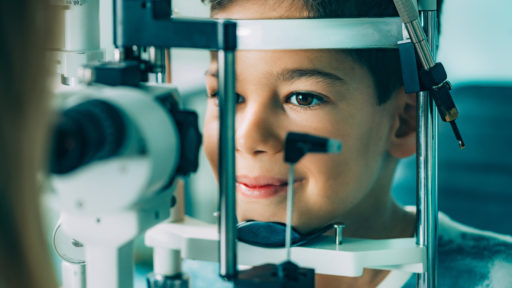
Dr. Wood also discusses how eye specialists diagnose these conditions using a slit lamp microscope, a specialized tool that allows detailed examination of the eye’s surface with different lighting, magnification, and diagnostic dyes to better understand the severity and cause of disease.
At UAMS Health, early diagnosis and treatment are key to relieving symptoms, protecting the eye’s surface, and preserving clear vision.
Video Player

Transcript
Ocular surface disease is a combination of many conditions, or it could be many different conditions. One of the primary reasons for it is that our cornea, the clear window we look through, is also the most sensitive part of our body, the most sensitive to pain and irritation. So even very mild things, such as mild dry eyes, inflammation or blepharitis on the eyelids, or certain infections such as viral conjunctivitis (pink eye) or bacterial infections, can all compound on the surface. Not only does this make the eye uncomfortable, it causes enough inflammation on the surface that it can also blur a person’s vision. If left untreated, this can sometimes scar and make that damage permanent. So we like to treat those patients, not only to alleviate their pain and symptoms, but to keep their vision clear and crisp.
To diagnose problems like corneal disease, we use what’s called a slit lamp microscope, which we use for most of our exams. That’s essentially a microscope with specialty lenses and filters, along with different magnifications and light angles, which lets us look at the surface of the eye at various angles and under different lighting to determine the depth of a problem and how severe it is. We also use various dyes, fluorescein dyes and lissamine dyes, which can help stain both the tears and the tissues to help differentiate between different problems.