Description
While many skin cancers can be treated in a clinic setting, some require more advanced care. Larger, more aggressive or recurrent skin cancers may need specialized treatment from a multidisciplinary team experienced in both cancer removal and complex reconstruction.
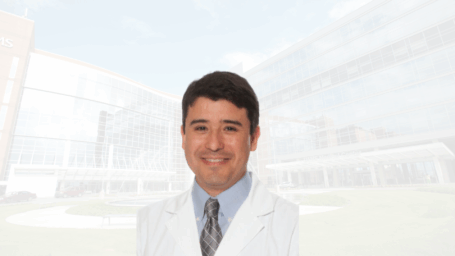
In this video, Dr. Mauricio Moreno, head and neck surgeon at UAMS Health, explains how advanced skin cancers are treated and how recent advances in cancer care are changing the treatment landscape. He discusses the growing role of immunotherapy, which can help shrink tumors — and in some cases eliminate them — before surgery is even considered.
When surgery is needed, the goal is not only to remove the cancer but also to restore appearance and function while preserving each patient’s quality of life and sense of identity. Dr. Moreno and the UAMS Health team work closely with other specialists to create personalized treatment plans designed to achieve the best possible outcomes.
Learn how advances in skin cancer treatment are helping patients receive more effective, personalized care than ever before.
Video Player

Transcript
The management of skin cancer involves multiple specialties. Dermatologists and dermatologic oncologists typically address smaller or less aggressive tumors that can be treated in a clinic setting. However, for anything more extensive — tumors that require complex reconstruction or more aggressive cancers that tend to spread to the lymph nodes — that is when our team gets involved.
For those patients, it is not just important to remove the tumor. It is equally important to perform reconstruction to restore normal appearance and function.
In recent years, there have been significant updates to skin cancer treatment guidelines. For advanced skin cancers, we no longer proceed directly to surgery. We typically begin with immunotherapy, which is an effective treatment that can reduce the size of the tumor — and in some cases eliminate it entirely — before surgery is even considered.
When surgery does become part of the plan, it is usually for an advanced or recurrent tumor. In those cases, the approach involves removing the primary tumor, performing appropriate reconstruction to preserve the patient’s appearance and sense of identity as much as possible, and addressing any additional areas where the cancer may have spread.