• Skip to primary navigation
  • Skip to main content
  • Skip to primary navigation
  • Skip to main content
Choose which site to search.
UAMS Health Logo UAMS Health
  • UAMS.edu
  • MyChart
  • Giving
  • Emergency Room
  • Types of Care
  • Locations
  • Doctors
  • Patients and Guests
  • Referring Physicians
  • Appointments
  • About Us
    • Awards and Recognition
    • Clinical Trials
  1. UAMS Health
  2. Clinical Resources
  3. Understanding Aortic Aneurysms and Modern Treatment Options | Dr. Kalapatapu | UAMS Health

Clinical Resource: Understanding Aortic Aneurysms and Modern Treatment Options | Dr. Kalapatapu | UAMS Health

Description

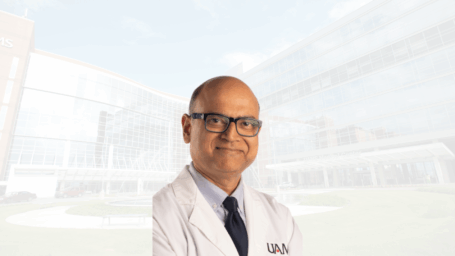
Meet Dr. Venkat Kalapatapu, professor and chief of vascular surgery at UAMS Health.

In this video, Dr. Kalapatapu explains what an aortic aneurysm is, how it develops, and why treatment at the right time can be life-saving.

The aorta is the body’s main blood vessel, running from the heart through the chest and abdomen before splitting at the level of the belly button to supply the legs. When the aorta begins to enlarge — much like air being blown into a balloon — the vessel wall grows thinner over time, increasing the risk of rupture. Aortic aneurysms are monitored closely, and when they reach a size where the risk of rupture becomes significant, treatment is recommended.

Treatment options have advanced significantly over the past several decades. While open surgery was once the only option, minimally invasive endovascular procedures are now available for many patients. Using small needle punctures in the groin, a stent is guided into place and positioned to seal off the aneurysm from circulation — eliminating the pressure on the weakened vessel wall and greatly reducing the risk of rupture.

The benefits of this approach are significant. Most patients stay in the hospital just one night and are back on their feet, back to work, and back to their normal activities within a couple of days.

Learn more about aortic aneurysms, how they are monitored and treated, and the advanced vascular care available at UAMS Health.

Video Player

Understanding Aortic Aneurysms and Modern Treatment Options | UAMS Health

Transcript

An aortic aneurysm is an enlargement of an artery or blood vessel in the human body. The aorta is the main blood vessel that comes out of the heart, travels through the chest, makes a U-turn down through the abdomen, and splits like a fork in the road at the level of the belly button to supply the legs.

The aorta can enlarge much like blowing air into a balloon. It can keep growing, and as it does, the wall becomes thinner. There is then a risk of it bursting — and that is not a good scenario. That is a life-threatening problem. When aortic aneurysms start to grow, we monitor them closely, and when they reach a size where the risk of rupture is high, we treat them.

Treatment options for aortic aneurysms have changed significantly over the past few decades. Initially, the only option was open surgery — opening the abdomen and repairing the aneurysm the traditional way. Over the last several decades, advances in technology have made it possible to treat many aneurysms through small needle punctures in the groin, where we guide a stent into place. I describe it to patients as putting a tube inside a tube. We get a seal above and below the aneurysm, blood flows through the new stent, and the aneurysm is excluded from circulation — greatly reducing the risk of rupture.

The greatest advantage of this endovascular approach is the speed of recovery. Patients stay in the hospital one night, go home the next day, and are back on their feet, back to work, and back to their normal activities within a couple of days. That is the most attractive part of treating aortic aneurysms with a stent.


Related Content

  • Resources
  • Conditions
  • Treatments & Procedures
  • Providers
  • Locations
  • Areas of Expertise
  • Make an Appointment

Related Resources

Doctor's hand writing medical notes or a prescription in a notebook, creating a record of patient information and healthcare details during a consultation

What Is Peripheral Arterial Disease (PAD)? Signs, Symptoms and Treatment | UAMS Health (Video)

Leg pain when walking could be an early sign of PAD. Dr. Kalapatapu explains the causes, symptoms, and treatment options for peripheral arterial disease.

Watch the Video
Patient sitting in a doctor's office smiling as the physician provides kind support. The interaction portrays a caring and professional medical environment fostering trust and compassion.

Carotid Artery Disease: A Treatable Cause of Stroke | Dr. Kalapatapu | UAMS Health (Video)

Carotid artery blockages cause up to a third of all strokes — but many are treatable before a stroke occurs. Dr. Kalapatapu explains your options.

Watch the Video
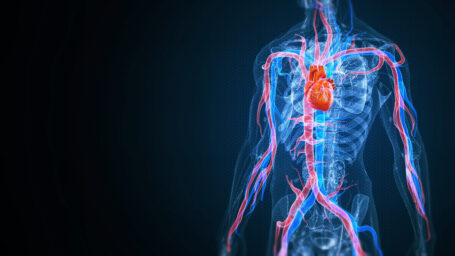
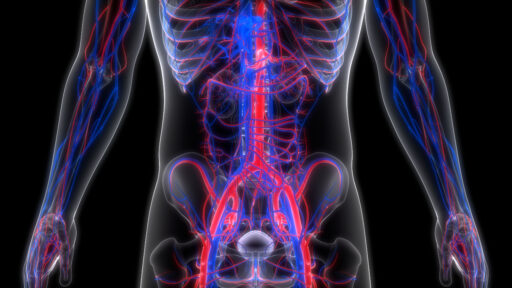
human body with heart and cardiovascular circulatory

Don’t Ignore These Warning Signs of Vascular Disease | Dr. Kalapatapu | UAMS Health (Video)

Leg pain, non-healing wounds, or sudden weakness could signal vascular disease. Dr. Kalapatapu explains the warning signs you should never ignore.

Watch the Video
Meet Dr. Venkat Kalapatapu | Vascular Surgeon | UAMS Health

Meet Dr. Venkat Kalapatapu | Vascular Surgeon | UAMS Health (Video)

From common vascular conditions to the most complex cases, Dr. Kalapatapu and the UAMS Health vascular surgery team are here for you.

Watch the Video

Related Conditions

  • Aortic Aneurysms
  • Carotid Artery Stenosis
  • Peripheral Artery Disease
  • Thoracic Outlet Syndrome (TOS)

Related Medical Treatments and Procedures

  • Carotid Endarterectomy
  • Coronary Artery Bypass Operations
  • Endovascular Aneurysm Repair (EVAR)

Related Providers

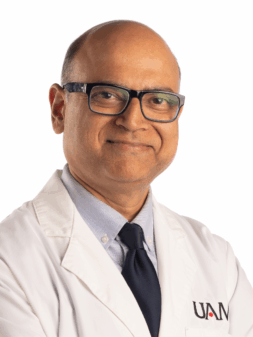
Venkat Ramana Kalapatapu, M.D.

Venkat Ramana Kalapatapu, M.D. Vascular Surgeon

View Profile

Related Locations

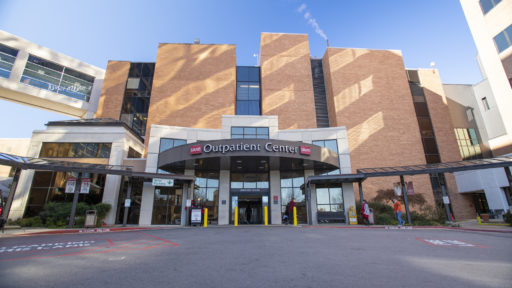
Exterior of Outpatient Center

Aortic Center (Part of the Surgery Clinic at the UAMS Medical Center)

4110 Outpatient Circle
Outpatient Center
Suite 4131
Little Rock, AR 72205

Appointment Phone Number
501-686-6176
New and Returning Patients
View Location Get Directions
Exterior of Outpatient Center

Vascular Surgery Clinic (Part of the Surgery Clinic at the UAMS Medical Center)

4110 Outpatient Circle
Outpatient Center
Suite 4131
Little Rock, AR 72205

Appointment Phone Number
501-686-6176
New and Returning Patients
View Location Get Directions

Related Areas of Expertise

Vascular Care

The highly trained vascular surgeons of UAMS Health offers unmatched expertise in comprehensive vascular care solutions.

View Area of Expertise

Make an Appointment

Request an appointment by contacting a clinic directly or by calling the UAMS Health appointment line at (501) 686-8000.

UAMS Health LogoUAMS HealthUniversity of Arkansas for Medical Sciences
Mailing Address: 4301 West Markham Street, Little Rock, AR 72205
Phone: (501) 686-7000
  • Facebook
  • X
  • Instagram
  • YouTube
  • LinkedIn
  • Disclaimer
  • Terms of Use
  • Privacy Statement
  • Notice of Privacy Practices
  • Price Transparency
  • Legal Notices

© 2026 University of Arkansas for Medical Sciences