Description
Oral cavity cancers develop inside the mouth and can affect the lips, tongue, gums, floor of the mouth, hard palate, and jaw. Recognizing the signs early is important, as early diagnosis and treatment can help improve outcomes and preserve function.
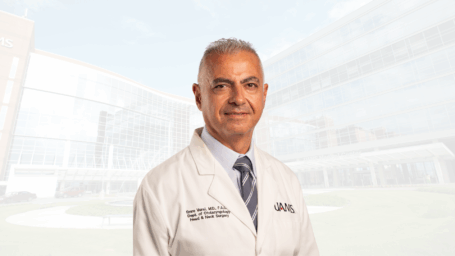
In this video, Dr. Emre Vural, head and neck cancer surgeon at UAMS Health, discusses the common symptoms of oral cancer, including non-healing mouth sores, persistent ulcers, difficulty speaking, and problems with eating or swallowing. He also reviews risk factors such as tobacco use, alcohol consumption, and chronic irritation within the mouth.
Surgery remains the primary treatment for many oral cavity cancers. Depending on the size of the tumor and whether cancer has spread to nearby lymph nodes, treatment may also include radiation therapy and chemotherapy.
Dr. Vural explains how advanced reconstructive surgery plays a critical role in restoring speech, swallowing, and quality of life after cancer treatment. By combining cancer removal with specialized reconstruction techniques, the UAMS Health team helps patients achieve the best possible functional outcomes.
Learn more about the signs of oral cancer, when to seek care, and the comprehensive treatment options available at UAMS Health.
Video Player

Transcript
Oral cavity cancers are cancers that develop inside the mouth. This can include the lips, gums, tongue, floor of the mouth, hard palate, and upper jawbone. They usually occur in patients with some of the risk factors we’ve discussed before, like alcohol and tobacco use, and also poor dental health, chipped teeth constantly rubbing against the tongue can create a cancer there.
These patients usually come to us with a non-healing or growing ulcer. It usually affects their speech, their oral intake, and sometimes their swallowing function. We typically do a biopsy from these suspicious areas to come up with a diagnosis.
Oral cavity cancers are still usually treated by surgery as the initial treatment. Depending on the extent of the tumor, staging, and the nodal involvement in the neck lymph nodes, we often recommend radiation treatment, with or without chemotherapy, afterward.
When we offer surgery for an oral cavity cancer patient, again depending on the stage of the tumor, the surgery results in a relatively large defect in the mouth, because the mouth is already a small cavity. Even a relatively small surgical excision can result in significant functional loss in oral cavity cancer surgical treatment.
We also provide reconstructive surgery after taking care of the tumor. This gives patients better speech and swallowing function afterward. Even with a relatively large amount of excision inside the mouth, patients usually achieve understandable speech and satisfactory swallowing function.