Description
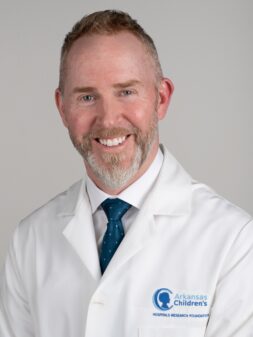
Meet Dr. Gresham Richter, chair of the Department of Otolaryngology–Head and Neck Surgery at UAMS Health.
In this video, Dr. Richter explains the different types of vascular anomalies — including hemangiomas, port-wine stains, lymphatic malformations, and other complex vascular lesions involving veins, arteries, or lymphatic vessels — and how specialized treatments can help manage these conditions.
Vascular anomalies often appear as a lump, bump, or discoloration of the skin and may be present at birth or become more noticeable as they grow over time. While some remain stable, others can expand, leading to discomfort, disfigurement, and other complications if left untreated.
Dr. Richter discusses how the UAMS Health team uses advanced, highly targeted treatment techniques — including superselective therapy — designed to shrink vascular lesions while preserving surrounding tissue, function, and appearance. Through a personalized and staged approach to care, patients receive treatment tailored to the complexity and location of their condition.
At UAMS Health, patients have access to a multidisciplinary team of specialists with expertise in even the most complex vascular anomaly cases, providing comprehensive, patient-centered care across Arkansas and the region.
Learn more about the signs of vascular anomalies, when treatment may be needed, and the specialized care available at UAMS Health.
Video Player

Transcript
My name is Gresham Richter. I am an otolaryngologist and chair of Otolaryngology–Head and Neck Surgery at the University of Arkansas for Medical Sciences.
I have a specific specialization in both airway disorders and vascular anomalies. When it comes to vascular anomalies, these are vascular birthmarks that affect any part of the body — many of which continue to grow with time. We use very specialized treatments to target these vascular lesions while preventing injury to adjacent structures. We use superselective therapeutic techniques to treat vascular anomalies and to protect the surrounding skin and form.
Conditions include hemangiomas, capillary malformations — otherwise known as port-wine stains — and many others that are much more complex and involve a variety of different vessels. It could be a vascular anomaly that has both veins and arteries abnormally connected, creating a network that continues to grow over time. It could be part of the lymphatic system that creates a mass continuing to grow with time.
We use superselective therapy and stage that therapy in order to help shrink these lesions while protecting the rest of the patient’s anatomy.
Vascular anomalies can present as either a lump or bump in the head and neck, or they may be superficially visible as a red or blue discoloration on the skin or in the oral cavity. They usually present at birth, but in some patients they show up later in life because they continue to grow and get bigger over time.
Vascular anomalies can be painful — especially as they expand. They can develop small clots inside them that make them much more uncomfortable. It is a complex condition that most often you can see, but what people do not realize is that these lesions get bigger with time and need treatment.
If vascular anomalies are left undiagnosed, they will continue to expand. They can cause significant discomfort and disfigurement. We are here to take care of them.