Description
Severe to profound hearing loss can significantly impact daily communication, making it difficult to connect with family, friends and the world around you.
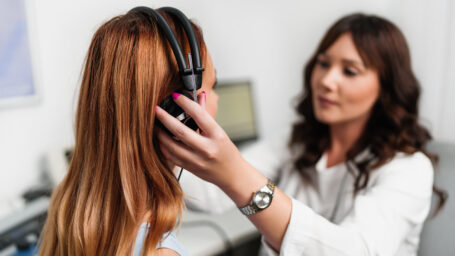
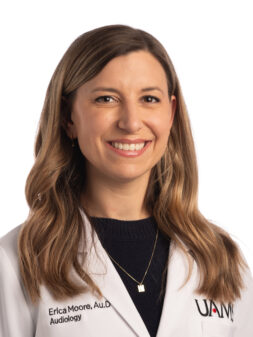
In this video, Erica Moore, Director of Audiology at the Jack Stephens Spine Institute at UAMS Health, discusses how her team evaluates and treats patients with significant hearing loss. Many individuals with severe hearing loss rely on lip reading, hearing aids or other assistive devices to communicate effectively.
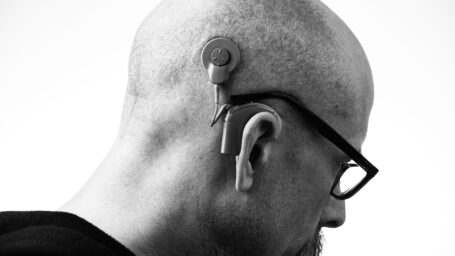
At UAMS Health, treatment options include hearing aids, cochlear implants and bone-anchored hearing systems. Dr. Moore shares her passion for cochlear implants, which can provide life-changing improvements in communication for patients who have struggled with hearing loss for years.
Care at UAMS Health is highly collaborative, with audiology working closely alongside ENT specialists, speech-language pathologists, neurology, psychology and physical therapy to provide comprehensive, team-based care throughout each patient’s journey.
Learn how advanced hearing solutions and a multidisciplinary approach are helping patients reconnect with the sounds and conversations that matter most.
Video Player

Transcript
My name is Erica Moore. I am the director of Audiology, and I work in the Audiology clinic at the Jack Stephens Spine Institute.
One of the most common conditions I see is severe to profound hearing loss. These are individuals who have little to no residual hearing and who rely heavily on lip reading to understand and communicate with their family members and peers.
I work with hearing aids, cochlear implants, and bone-anchored implants. Right now, I am really passionate about cochlear implants, because they are often offered to patients who have been struggling for a long time with hearing — even with hearing aids — and we can provide something that creates a drastic improvement in their daily communication and daily life.
When you come into an appointment at UAMS, you are getting comprehensive, team-based care. I work closely with other specialties, including ear, nose, and throat, speech-language pathology, neurology, psychology, and even physical therapy. We communicate throughout the patient’s journey, and sometimes patients do not even realize how much team-based support they are receiving, because we have so many people focused on improving their lives.
One of my hobbies is scuba diving. It is a really cool experience to see a whole new world.