Description
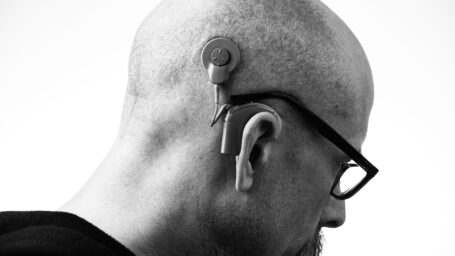
A cochlear implant is a specialized medical device designed for individuals with significant hearing loss who are no longer benefiting from traditional hearing aids.
In this video, Dr. Erica Moore, Director of Audiology at UAMS Health, explains what a cochlear implant is, how it works, and who may be a candidate for this life changing technology. Unlike hearing aids, which amplify sound, cochlear implants directly stimulate the hearing nerve to provide access to sound in a completely different way.
Dr. Moore also addresses common misconceptions about cochlear implant candidacy, including the belief that only patients with profound hearing loss qualify. In reality, candidacy is expanding as technology and outcomes continue to improve, meaning more patients may now benefit from evaluation than ever before.
At UAMS Health, patients receive comprehensive testing to determine whether a cochlear implant could improve their hearing and communication. Many individuals experience dramatic improvements in word understanding and overall quality of life.
Learn how cochlear implants are helping patients reconnect with the sounds and conversations that matter most.
Video Player

Transcript
A cochlear implant is an implant that goes into the hearing organ, the cochlea, which is why it’s called a cochlear implant. A cochlear implant is really for individuals who aren’t benefiting from hearing aids, and the level at which they’re hearing is usually pretty significant for hearing aids not to be beneficial. But there are so many different types and configurations of hearing loss that some candidates who think they may not qualify actually do. We always make sure to do the testing on anybody who’s close to criteria, just to see if there’s anything we can do to help them hear better.
One of the myths or misconceptions I see in a lot of patients is that you have to have severe or completely profound hearing loss to get a cochlear implant. But candidacy is expanding every day. Even when I started as an audiologist, candidacy was much stricter than it is today, so many people qualify now who didn’t before. We’re encouraging people who didn’t qualify in the past to come back and have another evaluation, because it could have such a big impact on their daily life.
I get to talk to these families, these individuals who have been struggling, about how a cochlear implant can change their life and give them more access to sound than hearing aids alone. Cochlear implants are a tool to hear better, so they’re not perfect, but I see people every day who go from 5 percent word understanding to 95 percent word understanding. It’s a drastic improvement.
The difference between a cochlear implant and a hearing aid is this: a hearing aid is a device you wear on or in your ear that amplifies acoustic sound, taking sound from the environment, increasing the volume, and putting it straight into your ear canal. A cochlear implant is different. It’s an implanted device, with one part implanted on the inside and an external processor worn on the outside. The external processor picks up sound from the environment and tells the internal implant what to do. The implant delivers electric stimulation directly, so it’s a completely different way of hearing, going straight to the hearing nerve so the individual can hear better by stimulating the nerve directly.