• Skip to primary navigation
  • Skip to main content
  • Skip to primary navigation
  • Skip to main content
Choose which site to search.
UAMS Health Logo UAMS Health
  • UAMS.edu
  • MyChart
  • Giving
  • Emergency Room
  • Types of Care
  • Locations
  • Doctors
  • Patients and Guests
  • Referring Physicians
  • Appointments
  • About Us
    • Awards and Recognition
    • Clinical Trials
  1. UAMS Health
  2. Clinical Resources
  3. Dr. Jun Song Explains Pelvic Organ Prolapse: Symptoms, Treatment Options & Recovery

Clinical Resource: Dr. Jun Song Explains Pelvic Organ Prolapse: Symptoms, Treatment Options & Recovery

Description

Pelvic organ prolapse affects many women, yet it often goes unrecognized or untreated. In this video, Dr. Jun Song, Assistant Professor and Urogynecologist at UAMS, explains what pelvic organ prolapse is. Dr. Song outlines a range of treatment options tailored to each patient’s needs — from pelvic floor physical therapy to non-surgical devices like pessaries, and surgical repairs when needed. He also emphasizes how physical therapy can help with both prolapse and urinary incontinence, offering better bladder control and improved comfort. Learn how most patients experience rapid symptom relief after treatment and can return to daily activities shortly after surgery, with minimal restrictions.

Video Player

Dr. Jun Song Explains Pelvic Organ Prolapse: Symptoms, Treatment Options & Recovery | UAMS

Transcript

Pelvic organ prolapse is a condition  where females can experience the bulge or protrusion of their pelvic floor organs such as the bladder, the uterus or the rectum and they often experience pressure sensation or bulge coming out the vagina. Women that have pelvic organ prolapse have a  wide variety of treatment options available and it all depends on how bothersome those symptoms are. We can do pelvic floor physical therapy or there are also non-surgical as well as  surgical options to repair the prolapse organs. For pelvic organ prolapse patients that may not  want to have surgery or may want to avoid surgery can have a pessary or a non-surgical device to  help treat their prolapse and if that doesn’t work or patients don’t want to deal with that surgery  is always an option. Pelvic floor physical therapy is a great option for patients who may just be  starting to experience some bothersome symptoms. It can help with the sensation of the bulge. It  can also help with patients that have urinary incontinence to give them better control over  their bladder. Generally after you have surgery for pelvic organ prolapse you’ll see an immediate  improvement or resolution in your symptoms and typically you’ll have some restrictions as  far as weightlifting but other than that most patients don’t have restrictions and you  can be back on your feet in the next few days.

Related Content

  • Conditions
  • Treatments & Procedures
  • Providers
  • Areas of Expertise
  • Make an Appointment

Related Conditions

  • Female Pelvic Organ Prolapse

Related Medical Treatments and Procedures

  • Pelvic Floor Rehabilitation

Related Providers

Jun Song, M.D.

Jun Song, M.D. Urogynecologist

View Profile

Related Areas of Expertise

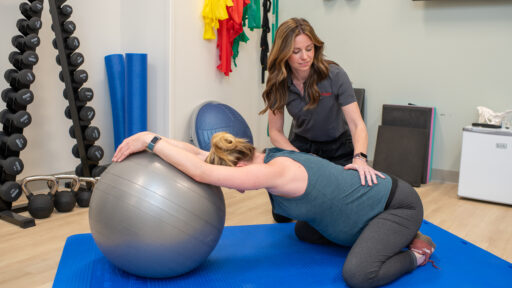
UAMS Health women's health physical therapist working with a patient on spine issues

Urogynecology and Reconstructive Pelvic Surgery

Urogynecology is a specialized field of medicine that focuses on the diagnosis and treatment of pelvic floor disorders in women.

View Area of Expertise
UAMS Health women's health physical therapist working with a patient on spine issues

Women’s Health Physical Therapy (Part of Rehabilitation and Therapy Services)

Women's health physical therapy is a specialized branch of physical therapy that focuses on addressing the unique health needs and conditions specific to women.

View Area of Expertise

Make an Appointment

Request an appointment by contacting a clinic directly or by calling the UAMS Health appointment line at (501) 686-8000.

UAMS Health LogoUAMS HealthUniversity of Arkansas for Medical Sciences
Mailing Address: 4301 West Markham Street, Little Rock, AR 72205
Phone: (501) 686-7000
  • Facebook
  • X
  • Instagram
  • YouTube
  • LinkedIn
  • Pinterest
  • Disclaimer
  • Terms of Use
  • Privacy Statement
  • Notice of Privacy Practices
  • Price Transparency
  • Legal Notices

© 2026 University of Arkansas for Medical Sciences